Monthly Budget: $3,000
September Spending: $2,993 (99.8% of budget)
Remaining: $7
My cost of living in Manila for September: $2,993 on a $3,000 budget. I relocated from Bali to the Philippines this month and barely stayed under my limit. Here’s the complete breakdown of what it costs to move countries while financially independent.
Manila Cost of Living Breakdown
Rent – $1,238 (41% of spending) Two overlapping housing situations during the transition. Paid for the last few days in Bali while securing the first week in Manila. This overlap is unavoidable when moving countries unless I wanted to be homeless for a few days. The hotel I stayed for my last few nights in Bali cost about the same as a Airbnb in Manila, but the place in Bali was nicer and walking distance to the beach.
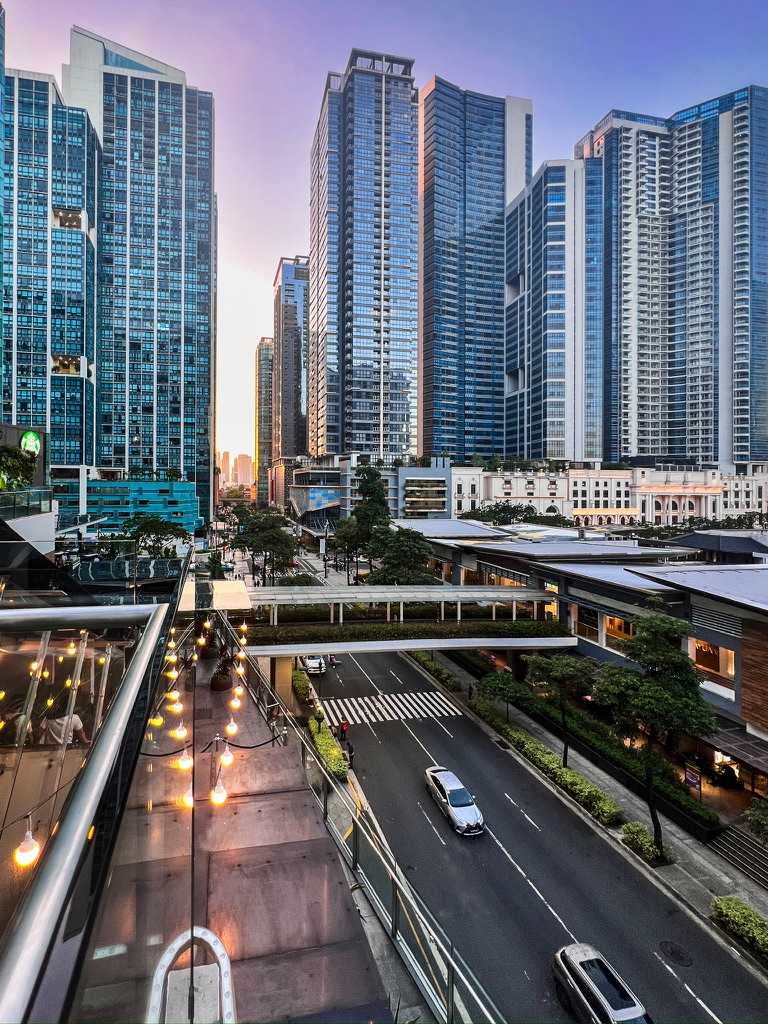
Restaurants – $771 (26% of spending) Higher than usual because I was eating out more during travel and settling into a new city. Finding grocery stores, learning the area, and not having a full kitchen setup yet all contributed to the restaurant spending spike. In addition, finding restaurants with vegetarian options in Manila is not easy and I was staying in the most expensive area, Bonifacio Global City.
Travel – $367 (12% of spending) Scoot Airline flights from Bali to Manila via Singapore, plus a weekend trip to Baguio to escape Manila’s heat (during a typhoon! Not my best moment of planning). The cost of moving between countries, even when you’re trying to be budget-conscious, adds up quickly. I wasn’t (and haven’t been in the past) good at booking flights far enough in advance when they’re cheaper and the cost of luggage (that basically contain all of my possessions) adds up.
ATM/Cash – $193 (6% of spending) Cash withdrawals for places that don’t take cards in the Philippines.
Healthcare – $149 (5% of spending) Bali medical clinic visit before leaving Indonesia ($122) plus pharmacy purchases. Getting medical stuff sorted before heading out.
Groceries – $91 (3% of spending) Low because I was in transition and didn’t want to buy a bunch of food I’d have to leave behind or eat in three days.
Transportation – $67 (2% of spending) GrabTaxi and Gojek rides. Manila traffic is challenging and public transit can be difficult to navigate, even for seasoned travelers, so rides are necessary despite the cost. Transportation represents a unavoidable portion of the cost of living Manila.
Entertainment – $38 (1% of spending) Ice skating at Mall of Asia (a mega mall that’s home to more than 600 stores and over 200 restaurants), bowling, arcade games, and a movie. Staying sane during a stressful move counts as essential spending, right?
Online Services – $35 (1% of spending) QuickBooks subscription and other digital services that keep running regardless of where I am physically.
What I Learned About Living in Manila on a Budget
Moving countries is expensive even when you’re being careful. The flights, cash needs, and eating out more while getting settled all add up fast. I used 99.8% of my budget. Still within budget, but I wasn’t watching closely the amount of spending for the month.
The housing situation: I’ve learned that I’m not the type who likes moving every few days or even every week. I like having a routine and keeping all my belongings in their place. I need time to establish where to go for a quick bite, coffee, groceries, and public transit.
Spending hours unpacking and organizing only to pack everything back up a week later is not only time-consuming, it’s exhausting. My goal now is to find a place to stay for a month or longer as my home base.
I stayed in Manila for 10 nights, then packed up and moved to Baguio for a few rainy days, then back to Manila for another 10 nights. The upcoming trip to Thailand has me in one Airbnb for almost a month, and I’m excited to feel a bit of stability.
Healthcare before international moves is worth prioritizing. Getting that clinic visit in Bali before leaving was smart. Dealing with health issues while settling into a new country would’ve been way more stressful and probably more expensive. While walking into a pharmacy to get a medication is not difficult, finding the medication I take can be a challenge. When I am in a country that has my medications, I stock up because I don’t know that where I will be next will have them available. That’s not something I want to have to deal with sorting out when I could’ve handled it ahead of time.
The restaurant spending spike was unavoidable. I could’ve stressed about every meal, but the reality is that when you’re moving monthly and don’t have your living situation fully sorted, you eat out more. Fighting that reality isn’t worth it for me. When I settle in one spot for months at a time, such as my recent 6 months in Bali, I buy groceries and the food budget is much more manageable.
Is Manila’s Cost of Living Worth It?
This month proves that Manila’s cost of living, even during an expensive relocation, can stay within budget if you’ve planned your safe withdrawal rate correctly. I moved countries, dealt with healthcare, took a weekend trip, and still came in at $2,993 of my $3,000 limit.
Some months will be $2,200. Others will be $2,900. The average keeps me sustainable indefinitely. That’s the whole point of the budget: it’s a ceiling, not a target.
Would I have preferred to spend less? Sure. But I also wouldn’t trade the peace of mind that came from handling the move properly instead of cutting corners to save $200.
Looking Ahead
The beauty of tracking monthly spending isn’t to beat myself up over every dollar, it’s to see patterns and adjust when needed. September was a high-spend month. I’m hopping over to Bangkok for a bit and hopefully October should normalize back to 70-80% of budget.